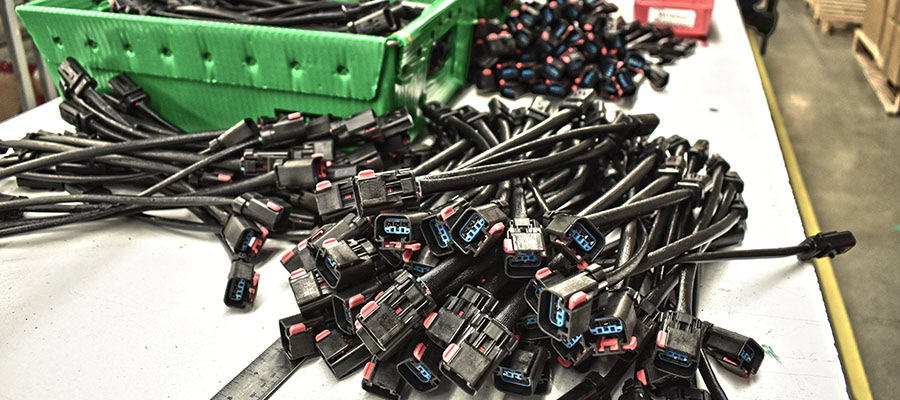
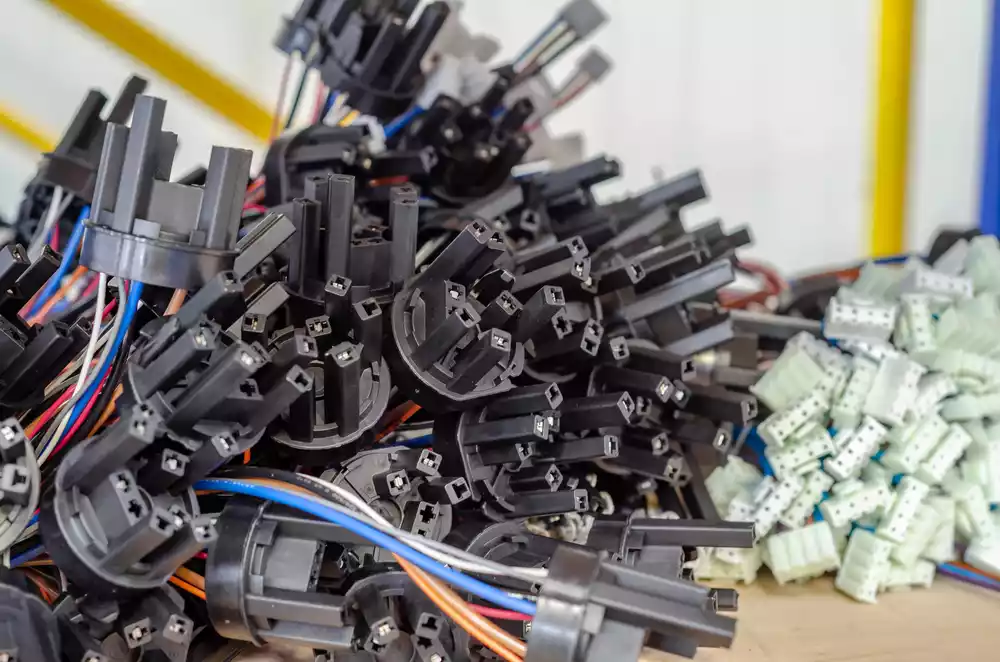
The delivery time of critical components is a cornerstone of industrial competitiveness. For operations managers and executives, optimizing cable harness manufacturing time is far more than a simple efficiency metric; it is a strategic lever that reduces tied-up capital and accelerates time to market.
Over the past few decades, the industry has transitioned from labor-intensive manual assembly to advanced precision engineering, enabling companies to achieve a consistently lower cable harness manufacturing time while maintaining the highest quality standards.
The evolution of efficiency: From physical staffing to intelligent automation
Historically, harness manufacturing was done almost entirely by hand, using a physical template known as a “pegboard” for layout and design. This method was slow, highly dependent on the skill of the individual operator, and prone to human error, resulting in extended periods of cable harness manufacturing time.
However, the landscape has changed dramatically. Key technological advances that have revolutionized and reduced production times include:
- Design for Manufacturing (DFM) Software: The ability to digitally simulate routing and assembly sequences before cutting the first wire eliminates costly physical iterations. By integrating design data directly with machinery, geometric errors are minimized.
- Automated cutting, stripping, and finishing: Modern cutting and crimping machines can process thousands of cables per hour with submillimeter precision. This automation significantly reduces the time spent on repetitive and error-prone tasks.
- In-line testing and verification systems: Integrating electrical continuity and resistance testing directly into the production line ensures that defects are detected in seconds, not at the end of the process, saving valuable rework time.
It is precisely thanks to this capability—the integration of DFM and automation—that critical projects, such as specialized cable assembly in Arizona for the aerospace sector, can meet strict deadlines and rigorous quality standards.
Strategic benefits of reducing times
A decrease in cable harness manufacturing time generates benefits that resonate throughout the organization:
- Higher performance: A faster production cycle means greater responsiveness to peak demands or market changes.
- Reduced total cost of ownership (TCO): Less time on the production line translates directly into lower labor costs and overhead expenses per unit.
- Risk management: Rapid manufacturing capabilities enable companies to reduce costly safety stock, mitigating the risk of component obsolescence.

The cascading impact on the global supply chain
Improvements in cable harness manufacturing time have a multiplier effect throughout the supply chain, offering significant leverage to global operations managers. For complex international assemblies, reducing the lead time for a key component allows planners to:
- Reduce delivery times: Shortening the manufacturing cycle allows for shorter and more reliable delivery times for end customers, which is crucial for maintaining competitive service levels.
- Optimize freight: Predictable, high-speed manufacturing enables more accurate logistics planning, favoring slower but more economical ocean freight options over costly last-minute air freight to meet deadlines.
- Geographic flexibility: With standardized and efficient processes, operations can pivot component production between global locations with minimal loss of cable harness manufacturing time, improving resilience to regional disruptions.
The financial impact of manufacturing speed
Beyond improving logistics, consistently shorter cable harness manufacturing time directly benefits a company’s financial health. By reducing the time it takes to produce a component, businesses can move away from holding excessive safety stock and instead rely on a more fluid movement of goods.
This shift not only clears valuable warehouse space but also prevents capital from being trapped in unused inventory, allowing those funds to be reinvested where they are needed most.
Furthermore, these operational improvements lead to a stronger bottom line. A faster production cycle means products reach the market sooner, which significantly improves liquidity and cash flow.
When manufacturing processes are optimized, the entire organization becomes more agile, allowing leadership to respond to market changes with confidence.
Ultimately, reducing cable harness manufacturing time is not merely an operational goal, but a strategic financial asset. It directly contributes to a more resilient corporate structure and generates greater long-term value for shareholders.
IMA: Leading the way in production optimization
At International Manufacturing & Assembly (IMA), we understand that technology is the engine of efficiency. We have invested in systems that not only standardize production but also apply advanced algorithms to optimize task sequencing and reduce cable harness manufacturing time to an absolute minimum.
Our promise is to ensure that, regardless of design complexity or order volume, reducing assembly times remains a core commitment to supporting the agility of your supply chain. Trust IMA to take your manufacturing precision to the next level of speed and efficiency.